
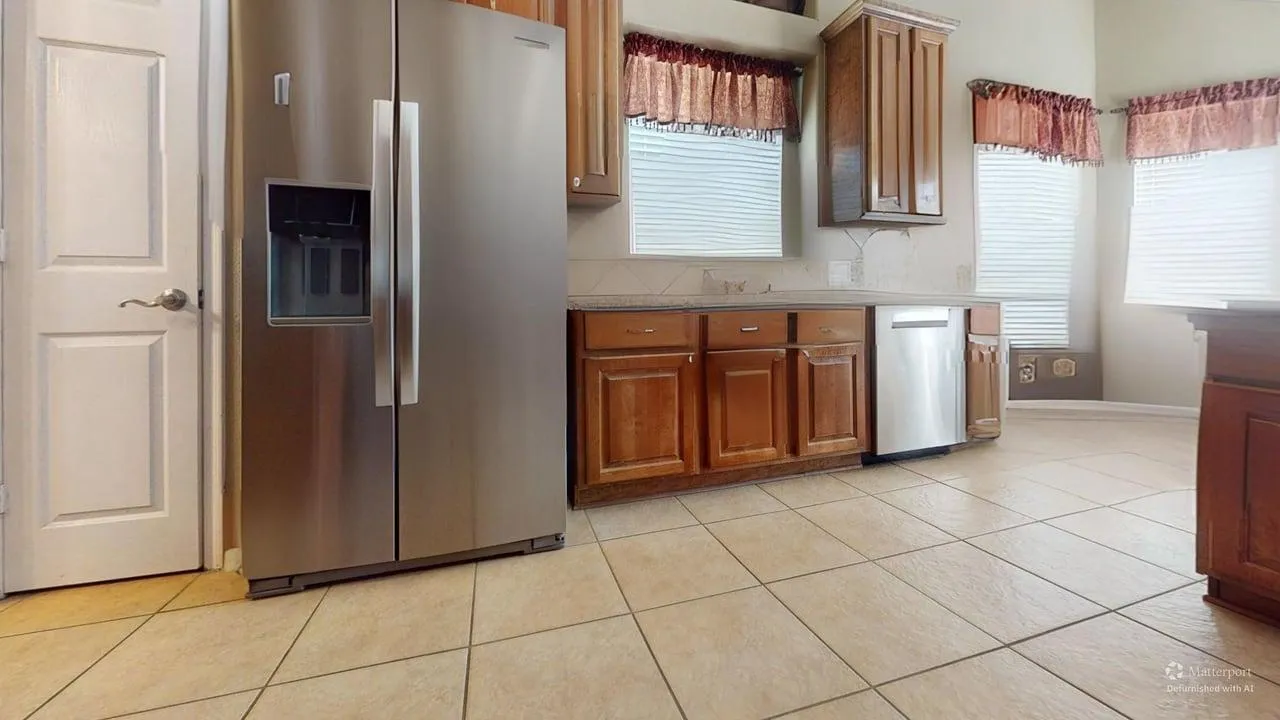
Do not panic and do not start tearing things out.
Here is what to do first.

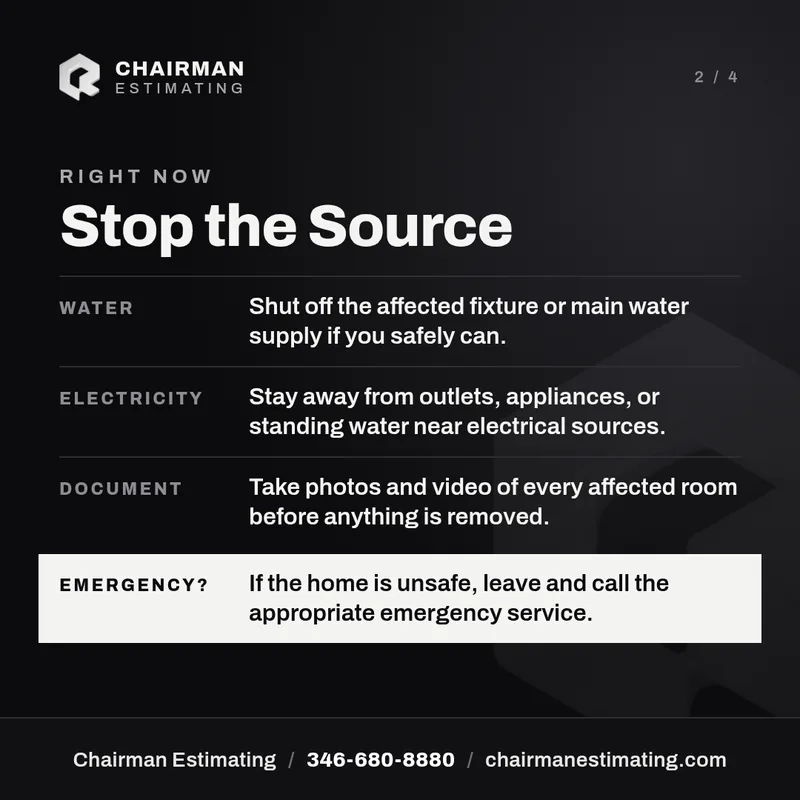
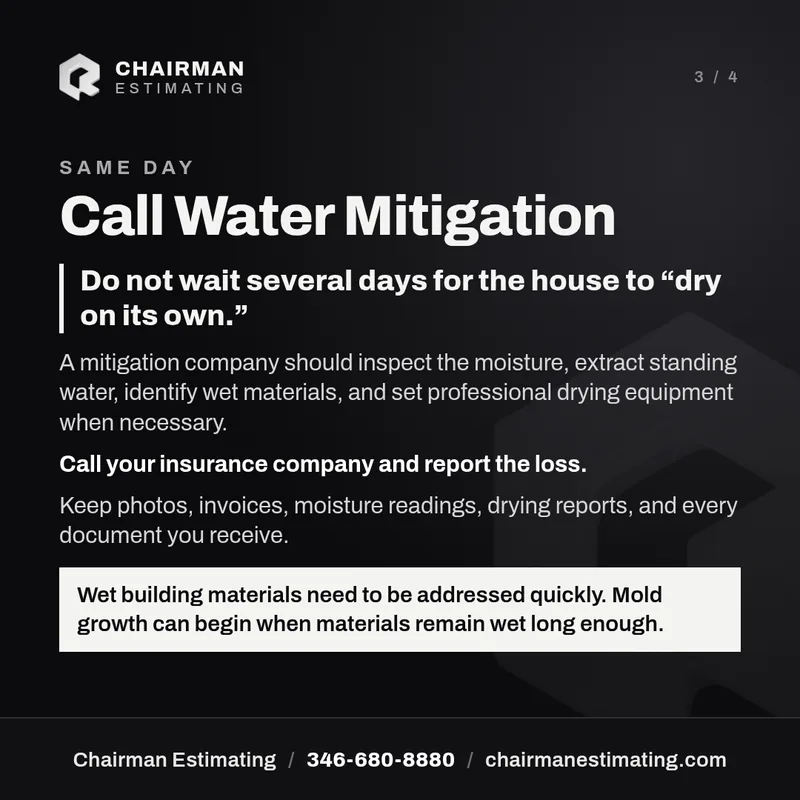

Swipe to see all 4 slides.
Right Now: Stop the Source
- Water: Shut off the affected fixture or main water supply if you safely can.
- Electricity: Stay away from outlets, appliances, or standing water near electrical sources.
- Document: Take photos and video of every affected room before anything is removed.
- Emergency? If the home is unsafe, leave and call the appropriate emergency service.
Same Day: Call Water Mitigation
Do not wait several days for the house to “dry on its own.”
A mitigation company should inspect the moisture, extract standing water, identify wet materials, and set professional drying equipment when necessary.
Call your insurance company and report the loss.
Keep photos, invoices, moisture readings, drying reports, and every document you receive.
Wet building materials need to be addressed quickly. Mold growth can begin when materials remain wet long enough.
Can’t Reach Your Adjuster? Want Someone Out There Fast?
Remember, the adjuster works for the insurance company, not for you. If you can’t reach them at night or on the weekend, here are some guys that can usually get there faster than the adjuster. These are local Houston contractors I work with. They handle insurance jobs every day, from water mitigation to the full rebuild. Call and they’ll get someone out as soon as they can.
See the Houston contractors I work with
Or call or text me at 346-680-8880.
Already have a crew from your insurance and not happy with the work? See your options.
Before the Rebuild: Know Exactly What Was Damaged
After the emergency is under control, you need a documented repair scope.
That means:
- Measurements
- Photos
- Affected materials
- Required repairs
- An Xactimate estimate you can compare with the adjuster’s estimate
Do not make major repair decisions from one number at the bottom of an estimate.
Chairman Estimating / 346-680-8880 / chairmanestimating.com
Benny Mancillas
Chairman Estimating, Houston, TX